The construction of Lithuania’s largest energy storage facility, commissioned by UAB “Aruno BESS,” has reached its final stage. Axioma Servisas is implementing this and three other strategically important BESS projects on a turnkey basis—from site preparation and equipment supply to system integration and final commissioning.
The total capacity of all the parks under development reaches as much as 260 MW.
The park will contribute to electricity balancing
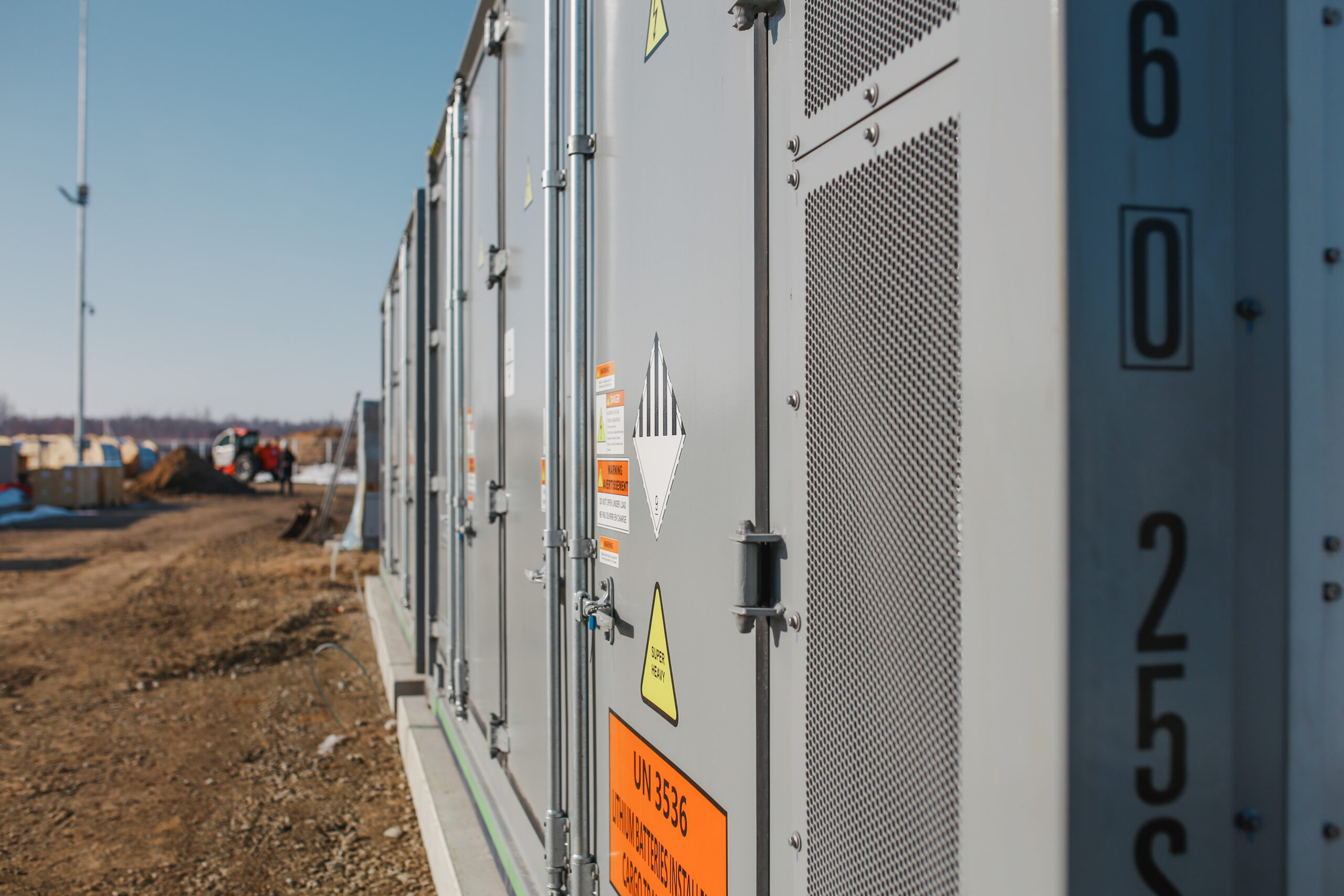
The modern energy storage park, with a capacity of 80 MW and a storage capacity of 160 MWh, currently under construction in the village of Bliūdžiai in the Panevėžys district, will be integrated into the country’s electricity transmission grid.
“The BESS park under construction will significantly contribute to electricity balancing in the Baltic States’ balancing market and strengthen Lithuania’s energy independence,” says Tomas Gerdauskas, head of the Vilnius service branch.
The advanced infrastructure will enable the efficient storage and transmission of electricity, increasing the flexibility and stability of the entire energy system.

Infrastructure installation is nearing completion on the 2-hectare site
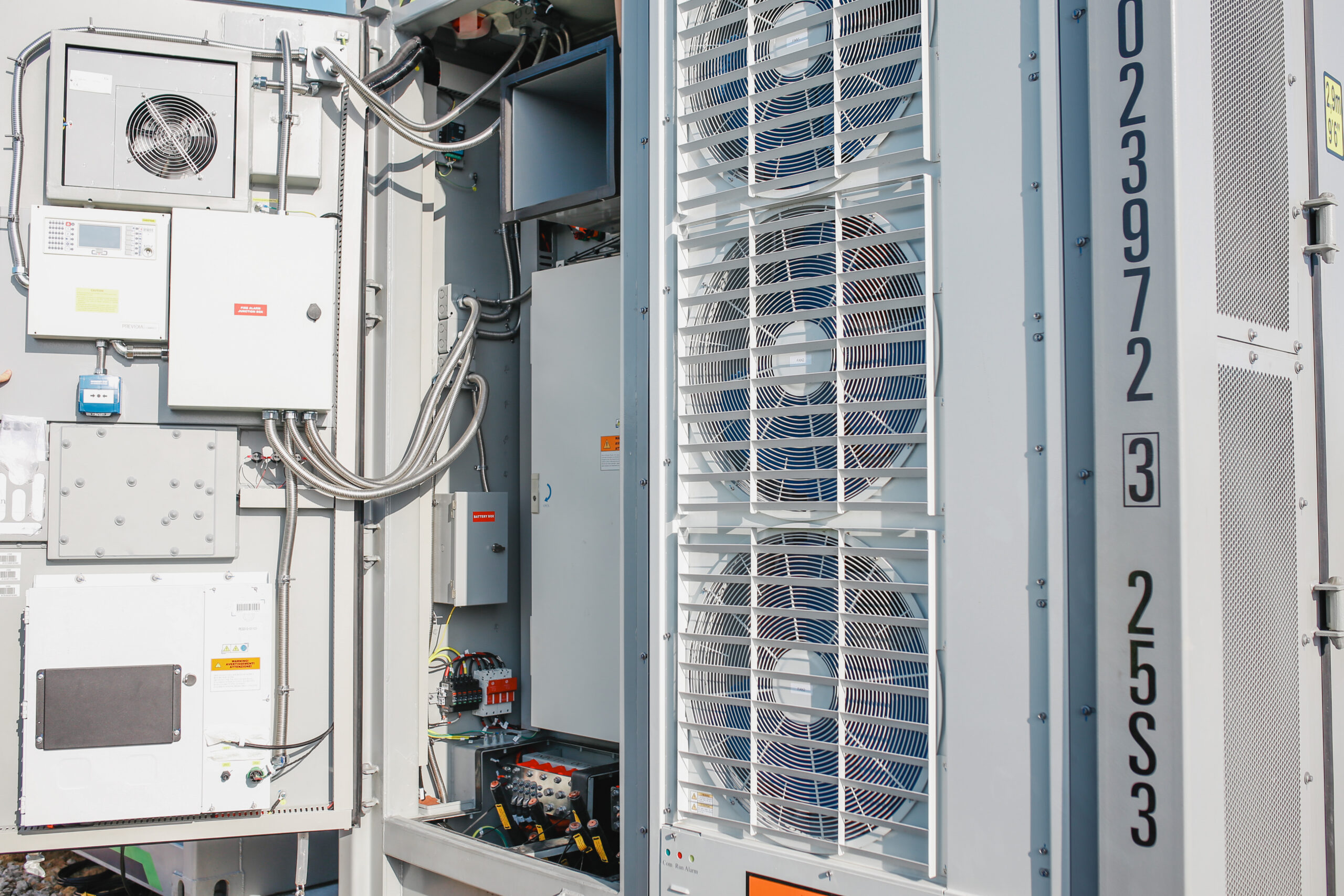
The energy storage project is being developed on a 2-hectare site, where the necessary infrastructure is nearing completion:
- utility and communication networks that will connect the park to the nearby LITGRID transformer substation;
- a 33/110 kV substation;
- energy storage units with inverters and 0.69/33 kV distribution equipment;
- a substation control panel.
Innovation Comes with Challenges
“This is the largest-capacity energy storage park in Lithuania to date, so it’s only natural that its implementation comes with challenges. Since commercial energy storage projects in the country are only just gaining momentum, their regulatory environment is also taking shape—the legal and technical framework is being developed,” explains T. Gerdauskas.
In addition, the work was complicated by an unusually cold winter—all work took place outdoors, so weather conditions had a direct impact on it.
“One of the coldest winters in recent decades also posed additional challenges, affecting the pace of construction. Nevertheless, despite the difficult conditions, the project is moving forward successfully,” says project manager Marius Šepronas.

The project is approaching one of its most important stages
Construction and installation work began in late summer 2025. Several dozen specialists from various fields are working on the project—from electrical engineers to construction and installation teams.
“The project is currently approaching one of its most important stages—equipment commissioning and testing. During this phase, the operation of all equipment is verified prior to energizing the system, ensuring a safe and reliable start-up of the park,” explains project manager M. Šepronas.
The project is scheduled for completion in the third quarter of this year.
An Investment in the Energy Future
Once the project is completed, the energy storage park will become a vital part of Lithuania’s energy system. It will not only contribute to the stability of the power grid but also help integrate renewable energy sources more effectively.
This is another step toward strengthening the country’s energy security and creating a sustainable, modern energy infrastructure.